
Beth and Jake’s Letter
When we received the letter from Beth and Jake, we responded and guided them through the process of implementing changes to address the teaching challenges they faced. This began with Beth saying: “rarely do children use materials imaginatively, in ways that reflect their own ideas in play”. Here is the letter from Beth and Jake with continued conversations between them and us over a short period of time.
Dear Professors,
We are a team of two educators – a lead teacher and teacher’s aide and Brian, a teacher candidate, who work in an inclusive Head-Start classroom with sixteen 3 to 4 year old’s. We need your help. We have several teaching challenges concerning children’s socio-dramatic play and we are not sure what to do about them. First we both think socio-dramatic play is very important for all children’s social development because it helps them develop acceptance of others who might be different and teaches them tolerance in a classroom of children with diverse needs. We like how the socio-dramatic play area offers boys the opportunity to take on different roles that challenge stereotypical male behavior. For example, we think it is important for boys to act out traditionally female roles, that help them learn about different social and family dynamics.
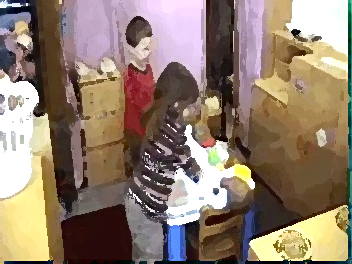
However, even though we have a generously-resourced socio-dramatic play area in our classroom, boys in particular do not play well in it. Instead, they often play singularly and in parallel when they act out domestic roles. They carry out tasks on their own. For example, we see this when boys change the baby’s diaper and mop the floor. Boys tend to copy each other’s play rather than initiating new play ideas. Because of this, socio-dramatic play has a “cookie-cutter” quality about it that makes it boring. This may explain why some boys are disruptive and break each other’s play props. We wonder how we can get all children and boys, in particular, to interact more with each other in the socio-dramatic play area, sustaining children’s play, and move from isolated tasks that are gender related but are difficult to develop into a story. We hope you can help us turn these challenges around so that we can help our children play imaginatively in the socio-dramatic play area.
Sincerely,
Beth and Jake
Our Response
Beth, Jake, and Brian, a teacher candidate, wanted to give children opportunities to play and learn through spontaneous and guided investigations because they believed spontaneous play is such a powerful window on children’s development and knowledge. After a brief discussion, the educators decided to set up a video camera to record what children did in play over a 20-minute period. The educators also created a “check-list” to document behaviors on video that illustrated the teaching challenges. As they viewed the videos, they saw:
- Solitary and parallel play: in parallel play, children copied one another as they carried dolls around and fed them. Children played with materials in literal ways e.g. feeding babies apples and holding a bottle to the baby’s mouth. Children did not share materials.
- Mundane play because children did not often speak or develop the play beyond repetitive actions.
- Play was not sustained because only a few children played there. The play was often single sexed but not stereotypical because children, irrespective of gender, played out mother and father roles. These roles were in response to the materials in the socio-dramatic play area rather than roles children thought up themselves.
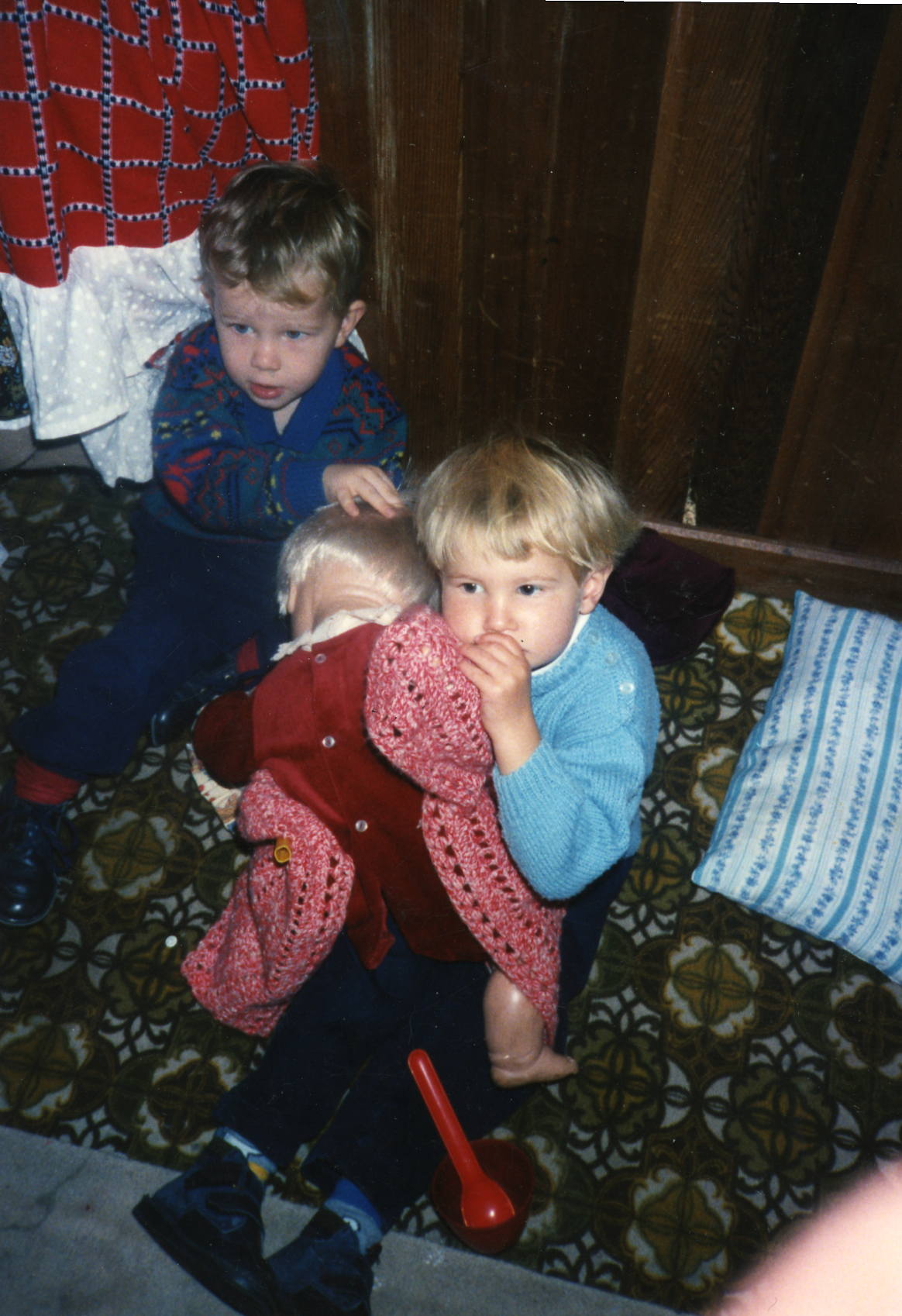
Some unexpected positive behaviors were noticed:
- A child who never played in the socio-dramatic play area, spent a long time changing a baby’s diaper.
- Another girl, described as a “flitter”, spent considerable time making a chain out of links.
- Examples of imaginative play about dragons and dinosaurs were seen.
- One child was identified as the initiator of the dragon play.
Beth and Jake were shocked and surprised that a quiet child had imaginative ideas for pretend play. They saw fleeting glimpses of children’s pretend play. During the dragon play, children acted out imaginative roles hiding in cupboards being dragons.
“I had no idea how they started playing dragons. I didn’t know so much went on. We really need to sit down and pay attention to this play. What did it mean when they put bowls on their heads to represent being dragons?” asked Brian
Assessment Helps Guide the Solutions

Beth and Jake already wrote down observations of the children as required by their Head Start program; their focus was on the specific Head Start learning outcomes and behaviors. They missed children’s imaginative play in the socio-dramatic play area and under assessed the children’s abilities. The educators wanted to find ways to help them recognize the children’s play.
Beth said, “I can’t believe I underestimated children’s social, intellectual and creative abilities.”
The educators asked, “How do we sustain the imaginative Dragon Play”
Beth and Jake decided to act immediately and showed the children the video the next day during circle time and asked the children to explain what was happening. The educators began by asking open-ended questions aimed at supporting the dragon play, e.g. “What can we do to help you play? What can I bring for you?”
Later, at the next team meeting, Jake reported, the children:
- were full of “great ideas at circle time that showed their thinking in their play”
- said they were either “good or bad dragons”
- understood the roles they played regarding who did what, why and where. The dragons were described as invisible, but children played with them and hid in a hole with them
- identified the materials they needed to continue the play, e.g. Princess Merryweather costumes to act out the role of princesses, paper to make shields to protect them from the dragons’ fire, dragons’ wings to fly and a reindeer nose
- said they wanted to build a dragon’s den with a roof, walls and a door with handles to lock the “bad” dragons out
During the next circle time the whole group of 16 children discussed plans for socio-dramatic play. In the art area, 10 children made props for the play. In the socio-dramatic play area, 8 children played out the plot.
Brian commented, “Children demonstrated more self-regulation as all abilities worked together, acted out their own ideas, organized the play, made props, and solved problems so that the plot developed from one day to the next.”
Jake remarked how they really enjoyed the play and wanted to know how to sustain it. That’s when Brian, the teacher candidate, met with Lori, the college librarian. She helped find a literature article to help the educators sustain children’s socio-dramatic play. The article by Howell & Corbey-Scullen, Out of the Socio-dramatic House Keeping Corner and Onto the Stage – Extending Dramatic Play introduced them to the strategy of “Talking Time.” The “Talking Time” strategy was developmentally appropriate for young children. It provided beneficial opportunities for children to describe their ideas for their socio-dramatic play. In addition, educators gained insights into the play that enabled them to improve their teaching.

Implementing “Talking Time” The educators video recorded circle time over a one week period and were thrilled to hear the children suggested a group of good dragons, a man buying puppies in the pet store, a person taking dogs outside, a pet doctor and a fishing pole maker. Beth said, “The children’s previously mundane socio-dramatic play was greatly improved when children made up their own characters.” Jake agreed, “This indicated how the teaching challenge of static play was overcome!” During Talking Time, educators encouraged children to say what the educators should do to help the children. Children asked for materials to make their own props for the play. They requested these props for their play:
- paper to make between “2 and 100 signs” to keep dragons out of the play area
- an x-ray machine for the veterinarian
- flames for the dragons, tape and string to make spiders’ webs
- a syringe to vaccinate pets
- a fish tank, a fishing pole
- a rope
At the next team meeting, the educators agreed the “Talking Time” worked well because it created daily opportunities during Circle Time for children to express and share their imaginative ideas for socio-dramatic play. Many aspects of the original teaching challenge were improved.
“There has been a blossoming of ideas,” commented Jake.
At the weekly team meeting, the educators reflected on the overlap between play plots. They were surprised how the play quickly moved between topics of wolves, the zoo, coyotes, fishing and dragons. The overlap was assisted as children used many different areas in the classroom for socio-dramatic play. By using the rug, art, block and socio-dramatic play areas, the play took place throughout the classroom.
The educators became aware of children’s interest in their own moral concepts related to “good and bad”.
The educators observed that during socio-dramatic play the children creatively used materials, concepts and knowledge. Children’s learning and development became apparent as they acted out play ideas. They demonstrated literacy skills by using sentence strips to read and write signs. “Talking Time” gave educators daily opportunities to listen to children’s play ideas, observe their actions and learn about the dynamics of their play.
Jake explained how educators’ teaching roles were changed. They were all amazed at children’s leadership, tolerance and concern for “good” forces.
One aspect of socio-dramatic play that still required improvement was to further develop educators’ roles during socio-dramatic play. They wanted to find out the effect of their involvement during socio-dramatic play.
A final video showed the impact of Beth’s involvement with four children. Three themes emerged:
First, educators’ proximity to children was important for educators to understand the play. Educators could then clearly see the socialization patterns among children.
Second, educators spoke about being fearful of taking over the play. They did not want to direct the play and so instead skillfully asked children for their opinions and explanations of what was happening. Brian remarked how he understood more about the thinking of pre-operational children and how that differed to his own thinking constrained by logic. For example, educators could not act out being a flying dragon whereas children did.
Third, educators’ participation in socio-dramatic play led to them being able to assess children’s abilities more accurately.
Jake was surprised by children’s ideas and resourcefulness. He said he never thought children had such imaginative ideas in them. He wondered about the origin of their ideas and pondered about their knowledge of obscure topics like wolves and zoos.
The educators’ were thrilled with the results The educators’ final reflections shared in team meetings suggested ‘Talking Time” worked “wonderfully.” Reading about and implementing Talking Time had a trans-formative effect on educators’ teaching. It had improved the quality of socio-dramatic play and the learning outcomes for children. The children’s learning improved in social, physical, language, intellectual, creative and emotional developmental areas. “Talking Time” improved educators’ use of assessment. They learned to see and observe the whole play and not merely look for prescribed learning outcomes. This meant that they valued children’s entire play more highly and children’s ideas expressed in fantasy were no longer missed in observations. More accurate and informed assessments were carried out and children’s abilities were no longer underestimated. All in all everyone on the team was excited about the out comes of their work and looked forward to video recording the next teaching challenge.
Sincerely,
Heather, Lorraine and Tricia

 Improved classroom organization will help each child become more independent by finding the toys and using the materials they want to play with. When children are fully engaged in their play, their behavior will improve which will give educators more time to support them.