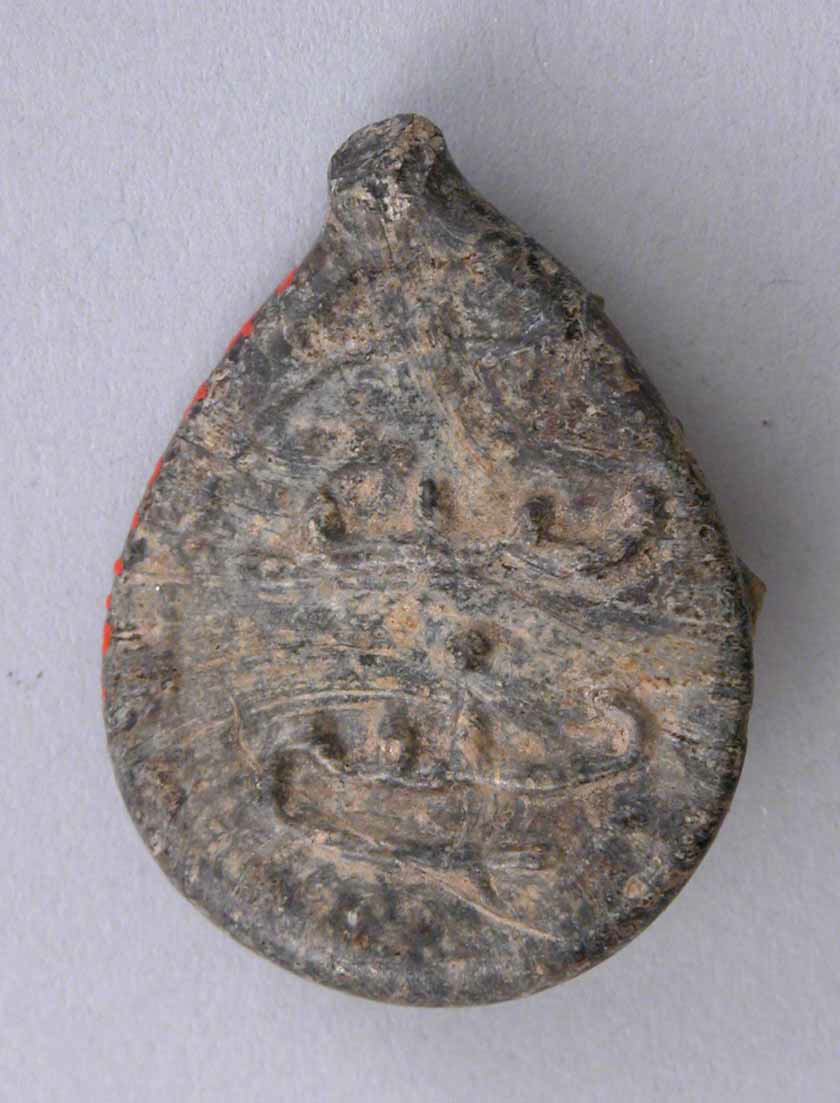
The object here is a glass seal impression that was excavated in Nishapur, which was a large economic center near the Silk Road and is located in modern-day Iran. Seal impressions have been used for thousands of years and for many different things such as writing a signature, marking one’s property, decoration, and much more. The use of this seal impression seems to be unknown.
How to use the source
- This source can be used to teach about Iran in the 8th–10th century
- Covers 10.8b
- This source can be used to help students explore the use of seals in different cultures
- Covers 9.1c and 9.3b
- The source can be used to start a discussion as to how these seals impacted islamic society and authority
- Covers 10.3d and 10.3b
Bibliography
- “Seal Impression.” The Metropolitan Museum of Art. Accessed July 19, 2024. https://www.metmuseum.org/art/collection/search/450118.
- “The City of Nishapur.” The Metropolitan Museum of Art, February 15, 2020. https://www.metmuseum.org/learn/educators/curriculum-resources/art-of-the-islamic-world/unit-six/chapter-one/the-city-of-nishapur.
- “Ancient Cylinder Seals.” Johns Hopkins Archaeological Museum. Accessed July 27, 2024. https://web.archive.org/web/20190630010857/http://archaeologicalmuseum.jhu.edu/the-collection/object-stories/cylinder-seals-from-the-ancient-near-east/.