By Courtney Romano
The most terrifying moment in the psychological horror film Hereditary is encapsulated in the moment when Annie (played by Toni Collette) seemingly transforms into her deceased daughter, Charlie. She sits in the car, grief weighing her down like an iron vest. Her breathing is slow, heavy, and almost mechanical, as if her body is no longer her own. Her face, once so expressive in its sorrow and rage, empties out like a hollowed shell, shifting into something that is no longer quite her, no longer quite human. It’s Charlie’s vacant, listless stare that replaces her features, the blank, eerie stillness of a person who is neither here nor there. And then, the sound, a single, sharp click from her tongue, unnatural in Annie’s mouth, too precise, too much like Charlie’s.
The moment is brief, but it sinks into the gut like a slow-moving sickness. The body tenses instinctively, hairs rising on the arms, a shiver of unease running down the spine. It’s not just the horror of witnessing a transformation; it’s the deeper, more insidious fear of watching someone lose themselves completely.
Few horror films in recent memory have left audiences as deeply unsettled as Hereditary, Ari Aster’s harrowing 2018 directorial debut. This chilling horror masterpiece is often praised for its exploration of grief and trauma, such as in Jess Joho’s “The real horror of ‘Hereditary’ is its realistic portrait of a family in grief”, and Emily St. James’s “Hereditary director Ari Aster on family trauma and researching that ending”. However, there’s another layer of horror at play, one that exists within the mind itself.
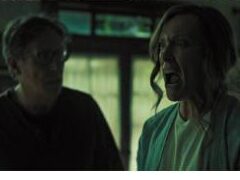
For those unfamiliar with the film, Hereditary follows the Graham family as they unravel after the death of their secretive grandmother, Ellen. Annie, the mother, is an artist who creates miniature dioramas, while her husband Steve works a typical office job. They have two children: Peter, a teenage boy struggling with anxiety and typical adolescent pressures, and Charlie, a young girl with a peculiar personality. The story begins with Annie mourning the death of her mother and is soon consumed by a series of increasingly terrifying events. These include Charlie’s tragic death, Peter’s supernatural possession, and Annie’s descent into a reality distorted by grief and mental instability. Strange rituals, inexplicable visions, and a cult-driven plot reveal themselves gradually, but the film’s true horror stems from the psychological disintegration of its characters, particularly Annie and Peter.
The mind is supposed to be the one thing we can trust, but when it turns against us, when identity begins to unravel, when we can no longer separate ourselves from something else, there is no escape. This is the terror of Hereditary. It’s not a monster in the dark; it’s the feeling of looking in the mirror and seeing something unfamiliar, something wrong.
Beneath its occult symbolism and supernatural terror, Hereditary can be read as a chilling portrait of schizophrenia, a disorder that blurs the line between reality and delusion, perception and paranoia. Annie’s gradual loss of control over her mind mirrors the disorientation and paranoia often associated with schizophrenia. The audience witnesses her reality shift subtly yet disturbingly: shadows appear where there should be none, figures loom in corners, and voices echo from unseen sources.
Annie is just one of the characters in the film who suffers a mental breakdown that eerily parallels the symptoms of schizophrenia.
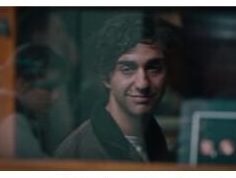
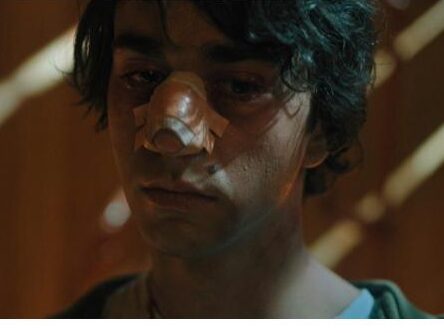
In fact, this horror repeats across scenes, not just in Annie’s transformation into Charlie but also in Peter’s breakdown at school. In one disturbing moment, Peter sees his reflection in a glass cabinet grin back at him while his own face remains frozen in fear. In another, he experiences sudden, uncontrollable seizures and hallucinatory episodes, emphasizing the terrifying instability of his perception. The disconnection between self and reflection, between perception and reality, mirrors the frightening instability of psychosis, leaving the viewer cold, numb, and deeply disturbed.
The horror of losing oneself, of becoming unrecognizable, is not just a cinematic fear, it plays out in reality with devastating consequences. One such tragedy is the case of Jordan Neely, a thirty-year-old homeless African American man whose severe mental illness, including schizophrenia, was dismissed until it was too late. Neely, who was killed by another passenger on the subway, cried out for help in his final moments, yet his suffering was reduced to a nuisance rather than addressed with care, as reported by Reuters in “Former US Marine found not guilty in fatal New York subway choking.”
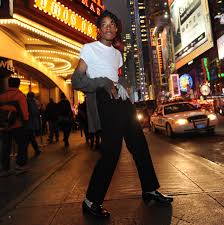
But before Neely was remembered as a homeless man in crisis, he was a child filled with light and music. Those who knew him recalled his joy as a young boy who loved to dance and sing along to the radio. His life changed dramatically when, at just fourteen years old, he lost his mother, Christie Neely, who was brutally murdered. That trauma haunted him, and though he found some solace in performing as a Michael Jackson impersonator in the subways, dazzling crowds with his moonwalks and glides, the pain of losing his mother lingered. Like Charlie in Hereditary, who is haunted by the manipulative influence of her grandmother even after her death, Neely carried the weight of his mother’s loss as an inescapable presence in his life. In the film, Charlie reveals that her grandmother wanted her to be a boy—an unsettling hint that her grandmother had long planned to use her as a vessel for something dark. This control and expectation continue to torment Charlie even beyond death, reflecting how inherited trauma can consume the next generation. Similarly, Neely carried the emotional and psychological burden of his mother’s death, unable to escape the shadow it cast over his life. Friends remembered him as someone deeply bonded with her, a teen who often said, “I miss my mama. I want my mama.” The tragedy of her death marked the beginning of his decline.
The parallels between Neely’s abandonment and Annie’s transformation into Charlie expose a deeper societal failure. When people in crisis are seen as problems to be controlled rather than individuals in need of compassion, they are at risk of being lost completely, both to themselves and to society. Like Neely, Annie is not just experiencing pain, she’s being erased.
This erasure is not just a personal experience; it is a reflection of how mental illness is often neglected by society. When mental illness is left untreated, when suffering is dismissed, the person at the center of it can disappear entirely, not just in their own eyes but in the eyes of the world around them.
In the aftermath of Neely’s death, public discourse largely focused on whether he was a threat, rather than on the fact that he was a man in crisis. His mental illness was reduced to a justification for force rather than a reason for intervention and care. His race was also a factor many pointed to, noting that Neely, a Black man with mental illness, was perceived as dangerous in ways a white person might not have been. This erasure of Neely’s humanity mirrors the loss of self that often accompanies severe mental illness, a theme that Hereditary captures with haunting accuracy.
Just as Neely was seen as a danger rather than a person in need of help, Annie’s transformation into Charlie represents the way grief and mental illness can consume a person, stripping them of their identity. In both cases, there is a societal failure to recognize the suffering at the core of these experiences. Neely was not just a disturbance on the subway; he was a man abandoned by a system that should have protected him. Similarly, Annie’s unraveling is met with fear and alienation rather than understanding. Both Neely and Annie lose their sense of self, not just in the eyes of others, but within themselves, becoming unrecognizable as their pain wholly overtakes them.
Neely’s story also reveals the systemic failures surrounding homelessness and mental illness in New York. Despite outreach efforts, he was left adrift, moving through shelters criticized for poor conditions and hospitals that provided no lasting care. His death highlighted a system that, in the words of New York City Mayor Eric Adams, repeatedly ignored problems until they ended in tragedy. As Adams said following Neely’s death, “Jordan Neely did not deserve to die. He was suffering from severe mental illness, but that was not the cause of his death. His death is a tragedy that never should have happened.” These failures show how deeply stigma and neglect run, not only in individuals’ perceptions but also in institutions meant to protect the most vulnerable. Neely cried out on that subway because he was desperate, because he had been abandoned by a system that saw him as a problem rather than a person. His suffering was real, but society chose to ignore it until it was too late. That same dismissal exists everywhere. The horror of Hereditary is not the ghosts or the supernatural, but the slow, creeping loss of control, the way Annie dissolves into something unrecognizable.
Hereditary stands as a chilling reminder of the terror that exists not in the supernatural, but within the mind itself. The horror depicted in the film is not a distant, external force but a deeply personal unraveling of identity and reality, mirroring the devastating experiences of those living with mental illness. Like the real-world tragedies we have seen, such as the case of Jordan Neely, the film exposes not just the pain of losing oneself, but the societal failure to recognize and respond to that suffering. Too often, mental illness is dismissed, leaving those who battle it isolated, unheard, and unprotected. This indifference has real consequences.
If we are to break the cycle of neglect and misunderstanding, we must confront the stigma surrounding mental illness with urgency and compassion. We must listen, advocate, and push for a world where no one is abandoned to their own unraveling. The true fear in Hereditary is not found in ghosts or demons, but in the inescapable psychological horrors that threaten to consume us from within. When the supernatural elements are stripped away, what remains is a raw, haunting portrayal of what it means to fear our own minds. An experience that lingers long after the credits roll, a psychological terror that is both deeply real and tragically universal.
Works Cited
Alfonseca, Kiara, and Jason, Potere “Jordan Neely, Man Killed on NYC Subway, Chokehold Death.” ABC News, 21 Oct. 2024.
Hereditary. Directed by Ari Aster, A24, 2018.
Hereditary Annie’s Possessed by Charlie’s Spirit.” YouTube, uploaded by user “Hereditary Annie’s Possessed by Charlie’s spirit”, 19 June 2018, https://www.youtube.com/watch?v=Nk-u029EeEA
Joho, Jess. “The Real Horror of ‘Hereditary’ Is Its Realistic Portrait of a Family in Grief.” Mashable, 14 June. 2018.
Jones, Shannon. “Movie Analysis: Complete Breakdown of Hereditary (Part Two of Three)” Voice on the Right, 5 Apr. 2019.
Leston, Ryan. “Hereditary Ending Explained: All Hail Paimon.” Slash Film, 20 May 2022.
McDermid, Brendan. “Former US Marine Found Not Guilty in Fatal New York Subway Choking” Reuters, 9 Dec. 2024.
St. James, Emily. “Hereditary Director Ari Aster on Family Trauma and Researching That Ending” Vox, 14 June 2018.
Wilson, Michael, and Newman, Andy. “How Two Men’s Disparate Paths Crossed in a Killing on the F Train” The New York Times, 7 May 2023.
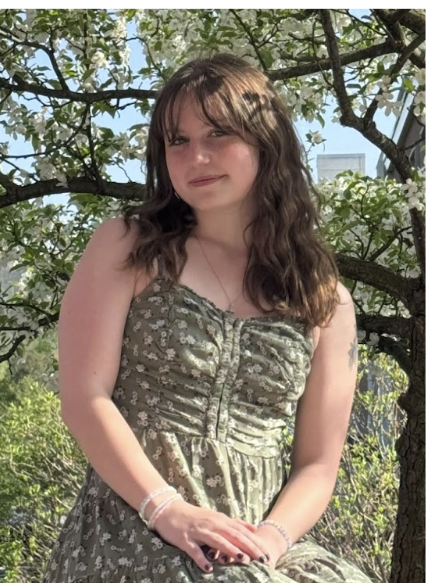
Courtney Romano (she/her) graduated from Warwick Valley High School in 2024 and is currently pursuing a degree in Psychology at SUNY Cortland. This is her first officially published piece.