By Elizabeth Hickis
The hit television series Sex and the City had a six-season run, airing from 1998 to 2004. After the series ended, due to massive demand and popularity, two movies were then created in 2008 and 2010. There is even a 2021 spinoff show- And Just Like That…, that follows the characters (from the original series) through life in their fifties. The original show follows four single women in their thirties as they navigate love, life, and work in the never-sleeping city, New York. Carrie Bradshaw, the protagonist, is the author of a newspaper column on dating. Her column analyzes the experiences of herself and her friends–Miranda Hobbes, Charlotte York, and Samantha Jones–to reveal insights about dating life, thus helping the column’s female readers navigate the stressful atmosphere of being a single, heterosexual woman in a patriarchal society. And as the ongoing popularity of the show from the late 90s to 2025 suggests, the show itself functions in a similar manner, allowing its viewers to have a similar learning experience to the fictional women who read the column.
While aspects of the show may be dated– it is 2025 now, we grew way out of the 90s– much of it remains true and relatable for viewers. In recent years, the show gained massive popularity again, especially in Gen Z social media spaces such as TikTok. This substantial resurgence of the 90s series brings up the question of why it is still relevant today. The ongoing popularity of the show suggests that even 21 years after the show’s final season, we have not achieved as much progress regarding gender equality as we may have thought.
In this piece, I’ll argue that the show remains popular among Gen Z viewers because it creates relatable characters, it critiques misogyny (mostly seen within Carrie and Big’s relationship, but as well as the three other main women), and it gives viewers a sense of hope, primarily by dramatizing the power of female friendship.
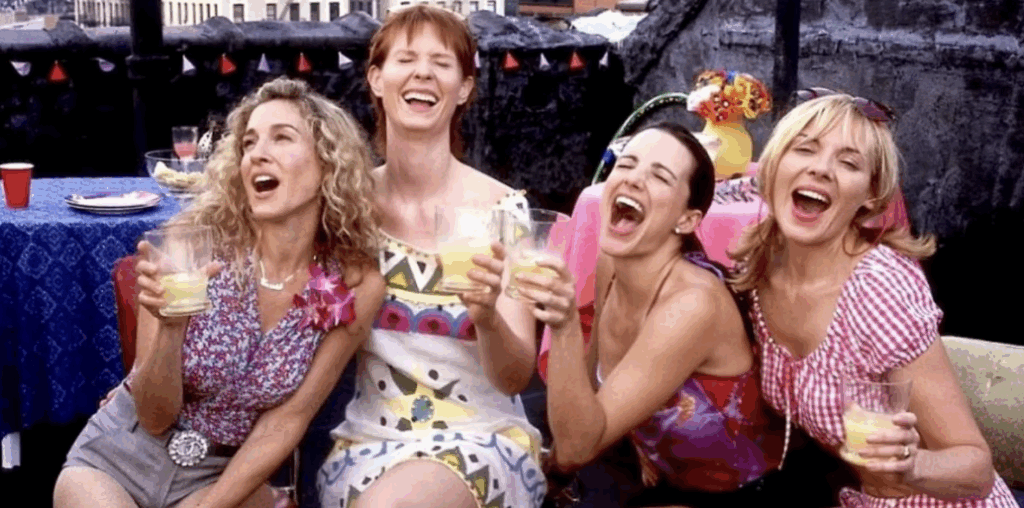
One of the main reasons the show remains so popular among Gen Z viewers is because of its relatable characters. The most notable aspect of the show is the tropes that are in many ways, timeless. The main women each fall into various kinds of female tropes. While much of this can be considered stereotypical– it is. The show toys with common stereotypes and binaries to create characters that are caricatures of various kinds of women (each showcasing various still-relevant concepts of today’s society), albeit they are all rich, white, and heterosexual. Viewers can see pieces of themselves in each of the four main women, adding to the show’s unwavering popularity.
Carrie, a polarizing character, is difficult to describe in simple terms. She is all over the place and often irrational in how she navigates her life. She is the most flawed character, but at times, the most relatable. Her biggest desire is to fall in love and sometimes that leads her to do things that are harmful to those who truly love her. We often see Carrie putting toxic relationships over her friends which leaves her to be considered selfish and self-serving. Miranda, her closest confidant, is the most pragmatic friend. She is sure of what she wants and full of logic. As a lawyer, Miranda often acts as Carrie’s voice of reason and attempts to rationalize how different men are either good or bad partners, basing her analysis on how they treat and respect women. Charlotte is a WASP (Wealthy Anglo Saxon Protestant) who lives in the Upper East Side and is a hopeless romantic. Her main goal in love and life is to find her “Prince Charming”. To her, love should be a fairytale (and also follow a traditional Christian route). She is the sweet and innocent friend of the bunch, but often times her fantasy clouds her judgment of reality. Because of her strict perspective on how relationships should be, she often passes pretentious judgment on her friends who don’t follow her dating standards. Samantha is the most progressive of the four. She is hypersexual and is uninterested in love. She believes men are for fun and pleasure, and that her friends are her true loves. Her character at the time of airing was the most unconventional; however, in 2025, she is adored and praised. Her promiscuity and ambivalence to men mark her as the strong and independent woman we know and love. Samantha consistently prioritizes the happiness of herself and her friends, and has a firm understanding of who she is. While the show is limited in its representation, many viewers even 20+ years later, can see parts of themselves in some, if not all of the women.
Throughout the series, we see the women go through relationships with men who are uninterested, selfish, and misogynistic. The tropes and dating experiences we see are often dramatized and humorized, which is part of what makes this show so timeless. It is oddly entertaining to watch a show that depicts the real-life struggles women go through while poking fun at them as well. It allows viewers to see they are not alone and to feel more comfortable in their current stage of life.
The show depicts the societal pressure placed upon women to get married and settle down as fast as possible, which translates to our current social climate as well. With the way dating has changed in recent years (arguably for the worse), many women are left distraught and discouraged, but this show helps alleviate the anxieties caused by these misogynistic expectations. With the surge of social media and online dating, human connection often gets lost behind a screen. It is harder to find a fulfilling relationship when apps such as Tinder promote dating vast amounts of people at once, while often judging potential partners off on a quick glance at a profile. TikTok user Brooke Justine posted, “Carrie Bradshaw was only 32 years old in season 1/ we have so many seasons ahead of us” (Justine 2024). Her video has garnered 467.6 thousand likes, with over one thousand comments of people agreeing with her, demonstrating how so many Gen Z viewers are also finding solace in the fact that we still have so much time to figure out who we are and what our place is in the world. According to the TV critic Noel Carroll, Carrie’s resilience in the dating world gives viewers a sense of hope. She writes, “Carrie’s great loves, in contrast to those of her friends, all go down in flames. Still, the program never despairs; it radiates that upbeat, “there’ll always be a tomorrow” point of view” (526).

Throughout the series, the women date countless men, all of whom provide a unique glimpse into how misogyny affects dating. From flings that last a single episode to relationships that span throughout the series, there is an endless representation of how the patriarchy negatively affects dating for women. Most of this is depicted through men who objectify the women and manipulate them. The most notorious relationship that we see, however, is Carrie and her on-and-off relationship with John Preston.
Carrie’s relationship with John, better known as Mr. Big (a wealthy, white businessman who never respects Carrie), exemplifies the toxic masculinity and microaggressions that women today still face. Carrie and Big’s relationship dramatizes what we would now call a “situationship”: a romantic connection between two people that lacks the commitment and stability of an established relationship. In a situationship, usually, one person wants a relationship while the other prefers to keep their options open, and it almost always ends with someone getting hurt. While he makes it clear throughout the series that he does not want to settle down with her, she makes it her priority to get him to one day hopefully commit. She often stands up her ever-loyal friends to spend time with him, knowing she may not hear from him again for weeks or even months. Despite her efforts, he keeps their fling private and ultimately never commits or values her nearly enough. He puts enough effort in to keep her around, but never enough to make her feel appreciated or comfortable in the relationship.
During a period where the two were together, Mr. Big moved to Paris with absolutely no regard for her; he was not even planning on telling her. Temporarily, this ended things. Although he made it clear he never wanted to commit to Carrie, he gets married to a much younger and (in his eyes) “put-together” woman, Natasha during this break-up period. She is everything Carrie isn’t. She never asks Mr. Big to change himself for her, she never asks for anything at all. She takes what she gets, whereas Carrie endlessly fights for more– for what she deserves. Mr. Big, a character who demonstrates toxic masculinity, only settles down with Natasha because she is easy for him to control, but this marriage didn’t fix his issues, especially surrounding infidelity. He cheats on her with– you guessed it– Carrie. He never valued Carrie as a woman, and we see this in how he treated her, but he always kept her on his back burner. To him, she was good enough to keep around for 10+ years, though he would only be with her in fleeting periods of time, or in complete secrecy. He continued to disrespect, manipulate, and emotionally abuse her. His actions directly illustrate how men do not value women, nor do they see women as equals. Sena Christian, an independent journalist and adjunct professor at Sacramento City College, writes, “A patriarchal society, such as the United States, is one in which male
domination and female subordination are sustained through the oppression and mistreatment of women. It is a society in which women are understood primarily in terms of male use” (1). This is portrayed through Mr. Big’s consistent disrespect towards the women in his life. Carrie was used as a vessel for him to gain pleasure. He never regarded Carrie as his equal, and we see that both in how he mistreated her, and in turn how Carrie allowed herself to remain subordinate to him.
Carrie and Mr. Big’s relationship is a prime example of the microaggressions women face on a daily basis, and this show remains popular and revered because these microaggressions still occur today. While it has been over 20 years since the show premiered, men still treat women the same way Big has treated Carrie. Still, women are used for their bodies and ignored for their emotional needs and desires.
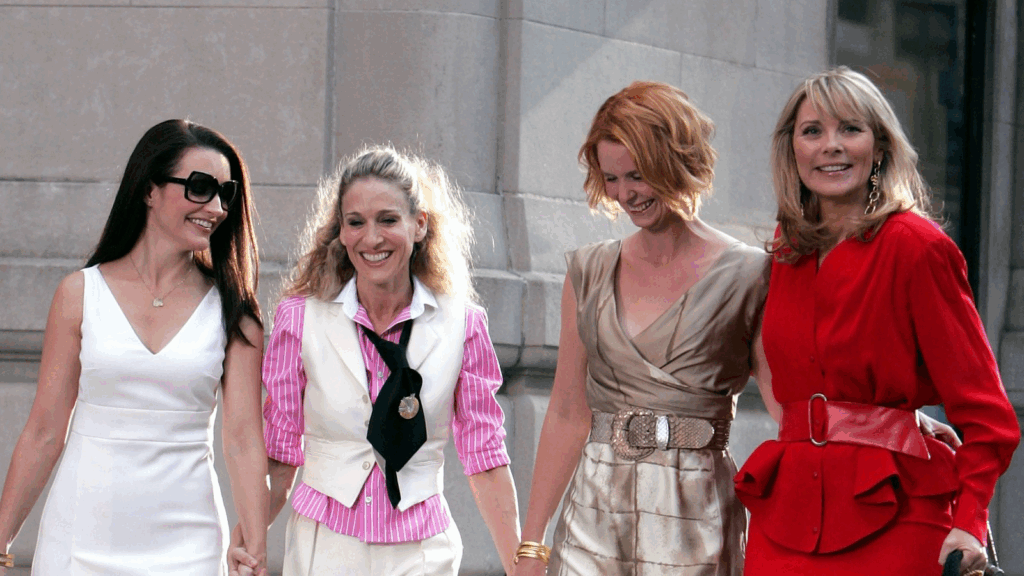
The show depicts the power of female friendships as one way that its main characters manage to survive and flourish within this patriarchal landscape. Carroll also writes, “The women are very close friends — steadfast and mutually supportive. They are funny and smart, and, of course, pretty and fashionable. But it is undoubtedly the warmth generated by their camaraderie that is the most attractive thing about them. It is hard not to admire the bond between these ladies” (537). Not only are the women themselves relatable, but their closeness to one another reinforces the beauty and power in female friendships. Charlotte famously says, “Don’t laugh at me, but, maybe we can be each other’s soulmates” which has been one of the most notable quotes of the series. Through the decades of failed relationships, marriages, loss, and grief, the women’s friendships never wavered. Each episode they meet at their go-to diner and debrief the current events of their lives, providing each other with endless support. Even through fights within themselves, they come back together even stronger. In watching the show, we see that they truly are each other’s soulmates and that is the most important thing to them. They ultimately do not need the men in their lives in order to succeed or find happiness so long as they have each other.
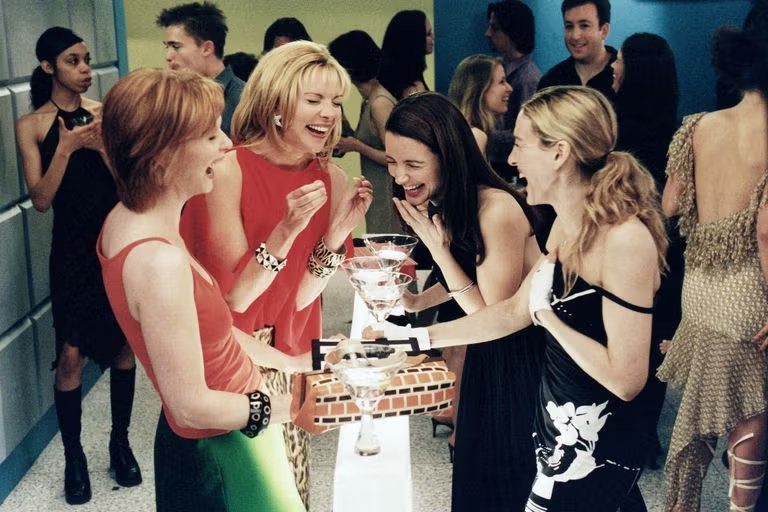
In general, Carrie, Charlotte, Samantha, and Miranda are representative of the fact that women can be incredibly successful on their own in male-dominated careers, without the need of husbands. Through these characters, the show highlights the benefits and power women are able to find within each other, and with characters like Samantha, it embraces a woman’s right to sexual freedom without ridicule or shame– something that was previously only ever allotted to men. However, while much of this show can be seen as a positive representation of feminism, it also represents people of color and gay characters in harmful, stereotypical ways.
The show reveals both the limitations and growth of our culture. While it represents how women are affected by the patriarchy in romance, the women depicted are all wealthy, white, and straight. This dictates both the audience demographic and the portrayal of these women. It also creates a disparity when representing other races and sexualities, as there is little to none in the series, and any representation (if at all) is harmful. As much as this show has been coveted by its initial viewers of the late 90s/ early 2000s and Gen Z, and there are great messages to take away from it, it still showcases harmful stigmas that further oppress various racial and sexual identities.
While the show uplifts women, it particularly represents the experiences of white, successful, straight women and lacks representation and positive depictions of people that exist outside of their privilege. Many people of color are represented through harmful stereotypes. While there were not that many people of color to begin with, the few that were a part of the show were displayed in a way that exposed racial prejudices and harmful stigmas. Samantha, for example, was dating a black man, Chivon, whose sister was Adeena, a chef. At first Adeena got along well with Samantha, but she quickly became rude and even violent towards her because she didn’t want her brother to date a white woman. Even Samantha’s relationship was fetishizing the idea of dating a black man in general, through romanticizing the relationship and accentuating aspects of black culture. There are also instances of Carrie using African American Vernacular English, especially when talking about flashy gold jewelry she was adorned in during an episode, which she refers to as “ghetto gold” as opposed to jewelry she would typically wear on a day-to-day basis.
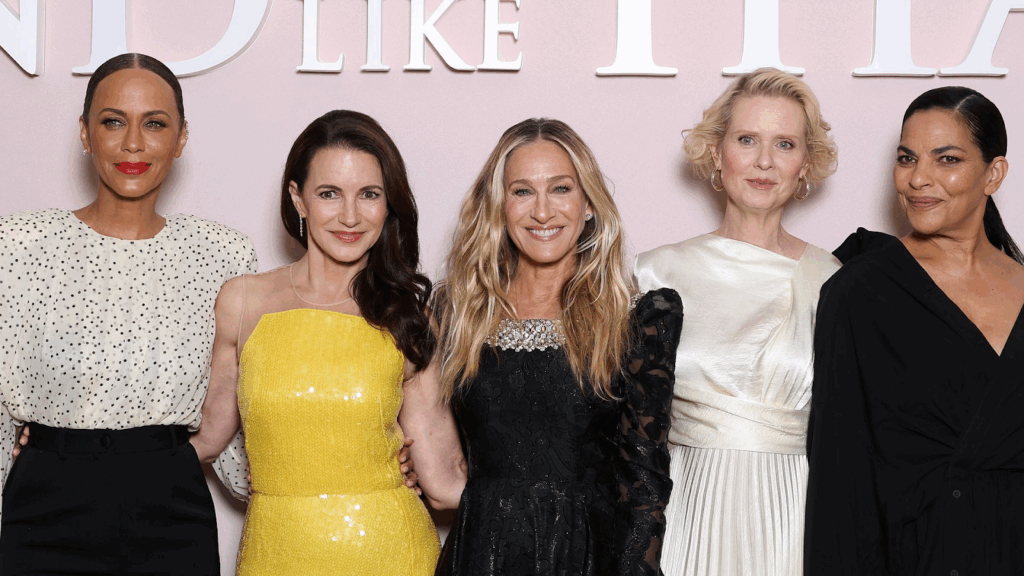
Many of the faults of the original series, however, have been corrected in the series spinoff, And Just Like That…. The spin-off series not only focuses on the women in adulthood (all but Samantha), but it also explores social issues like gender identity and race. The cast of new characters is also diverse in race, sexuality, and gender. We see black, mixed-race, gay, and non-binary characters represented in a multitude of ways, not just the harmful stereotypes as seen in the original series. However, despite the progress the spinoff series has attempted to make, the show completely missed the mark and was massively disliked by viewers. And Just Like That… had some big shoes to fill following Sex and the City, and it failed to come close. The writing in the show was its biggest issue, coming across as rushed and lazy. While the earlier racist and homophobic elements of the initial series were fixed and the reboot showcased storylines exploring race, gender, and sexuality with a degree of respect, the writing failed to flesh out the experiences of the characters in these storylines. The show, in fact, included many plots that were never fully explored or concluded, such as the plotline surrounding the outcome of Miranda and her soon-to-be grandchild. There also seemed to be a disconnect with the characters of this season. So much so that it felt as if the writers of this series never even watched Sex and the City. Much of the show was simply not relatable. One example of this is Carrie dealing with the loss of her spouse. Mr. Big died of a heart attack in the first episode, and it felt like the grieving process was completely rushed. In fact, she went back to dating Aidan, her ex-boyfriend from the original series (who is now living in Virginia). Carrie has both said she regretted dating Mr. Big (anyone who watched the original series knows how unlike Carrie that is to say) and agreed to date Aidan via little to no contact for five years while he deals with family issues in Virginia– again, the old Carrie wouldn’t do this. The wealth in the show has also become a forefront of the characters and created a massive disconnect for its viewers. It is far more grand in this series than the previous.
Although And Just Like That… became inclusive to various identities, it was not enough to make the show enjoyable or relatable for its viewers or to garner the same success as Sex and the City. The writers missed ample opportunities to delve deeper into real-life issues women in their 50s and 60s face– such as divorce or widowing (which were both merely touched upon) to focus on the women’s wealthy lifestyle and to cram as many plotlines in the show as possible. Viewers’ near-unanimous disappointment in the show resulted in it being cancelled abruptly at the end of its third season.
While the original series remains relatable and a comfort watch for some, it is crucial to recognize its shortcomings. The show depicts the struggles that straight, upper or upper-middle class white women face while attempting to date in a patriarchal society. The ongoing popularity of this sitcom from the late 1990s and early 2000s reveals that we have not fully achieved nearly as much progress in terms of gender equality as we may think. The ongoing relatability of this show speaks to the quiet ways misogyny still exists throughout society– especially within heterosexual relationships. However, despite the ways this show serves as a relatable comfort watch to some, it is important to note and question how it can potentially alienate other viewers through its racism and homophobia. When watching a show like Sex and the City, it is easy to get caught up in the glamour, humor, and the chic New York City lifestyle the women are a part of, but only some of its viewers will see themselves represented in the show. Sex and the City is still a crucial watch for many, as it calls out various kinds of misogyny that women have faced (and still do), and it also promotes the beauty and importance of female friendships. With that being said, it is imperative to note the ways society has progressed past the blatant depictions of racism and homophobia that are sprinkled throughout the show’s six-season run. While these issues were touched upon in And Just Like That.. the series failed to have the relatable touch that made Sex and the City a cult-favorite.
Works Cited
Carroll, Noël. “Consuming Passion: ‘Sex and the City.’” Revue Internationale de Philosophie, vol. 64, no. 254 (4), 2010, pp. 525–46. JSTOR, http://www.jstor.org/stable/23960986.
Christian, Sena. “Love in a Misogynistic Society.” Off Our Backs, vol. 34, no. 5/6, 2004, pp. 33–35. JSTOR, http://www.jstor.org/stable/20838078.
Liz Hickis (she/her) graduated from SUNY Cortland in 2025, majoring in English. As an undergraduate, she was a co-founder of Emblaze and a member of Sigma Tau Delta, the English Honor Society. She is a managing editor for issues 1 and 2 of Emblaze and is looking forward to continuing writing and editing for the journal. Liz is currently pursuing a Master’s in English from SUNY Cortland. In her free time, she enjoys reading fiction, her favorite novelists being Elena Ferrante and Fyodor Dostoevsky, and writing literary and cultural criticism.