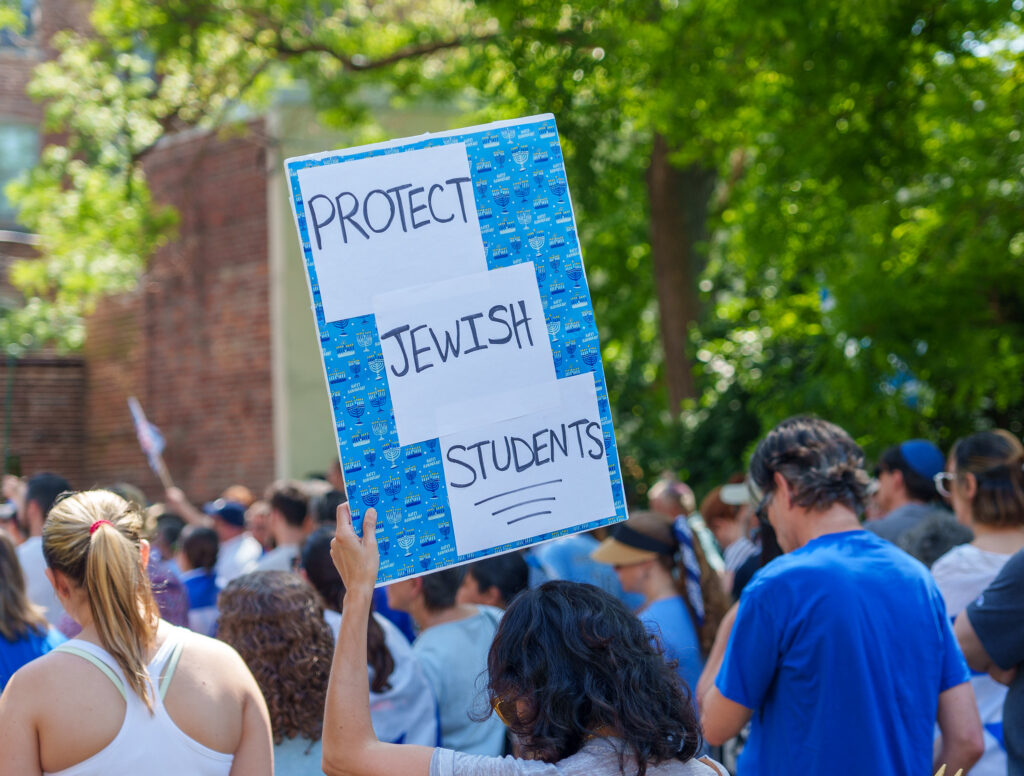
In the wake of growing national concern over campus antisemitism, Jewish students at SUNY Cortland describe feeling alienated by peers and unsupported by administrators, sparking conversations reflecting a broader struggle facing Jewish communities across American campuses.
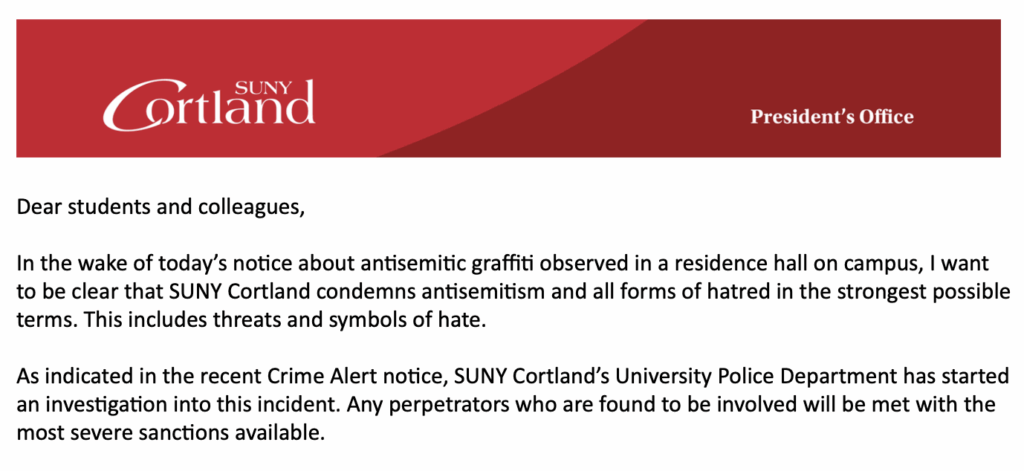
This email arrived in inboxes at 2:48 p.m. on Monday, Nov. 3, 2025 — a campus-wide message from the president’s office stating that there was, yet again, another incident of antisemitism on campus, which many students quickly opened and many would soon forget.
For me, as a proud Jewish student and member of Cortland Hillel, it was a moment that stirred both reflection and concern. I decided to reach out to other Jewish students across campus, asking whether they had experienced antisemitism at SUNY Cortland and how those experiences shaped their sense of belonging. What I heard echoed a growing national concern.
Jewish students here say they often feel alienated by peers and unsupported by administrators — a reflection of the broader struggle Jewish communities face on campuses across the country. “The Anti-Defamation League (ADL) reported that in the three months following the start of the [Israel-Hamas] war, antisemitic incidents in the U.S. skyrocketed by 361%. And the impact continues to be felt.” Says Time noted in June of 2025.
Those national numbers felt distant until I began talking to other Jewish students on campus. Their stories made the issue feel closer to home. While interviewing students, I had asked two simple questions: Have you ever experienced any antisemitism on campus? And are you willing to share your story? Most students answered overwhelmingly with yes to both questions. With their permission, I am able to share their stories.
“Honestly, I do get scared if I wear my Jewish star necklace in public, or even say Hanukkah, Passover or Rosh Hashanah out loud,” said Rachel Miniman, a member of Alpha Sigma Alpha and an active member of Hillel. “You never know who’s listening and what prejudice they hold — or if they might say or do something.”
Rachel isn’t alone in her fears. Several other Jewish students described moments of discomfort, from offhand jokes in dorm rooms to feeling isolated during discussions about the Middle East in class. While not all experiences amount to overt discrimination, the pattern of unease has left many questioning where they fit in on a campus they otherwise love.
Emma Linsow, the president of Corland Hillel, shared some stories of her own. A few times that she has experienced antisemitism on Cortland’s campus were in her own room and suite, a place she calls home, and even at the bars in Cortland. She described times when she was doing nothing but sitting in her room doing homework when her friends brought people over to her space, and both would make jokes after seeing her Israeli flag hung up on her wall. She has even said she would hang out in public places off campus with close friends and overheard others make jokes like “I’ll get the oven ready for you” and “Get the f— away from me. I can’t be around you. I hate Jews.”
After hearing from several Jewish students who shared concerns about antisemitism on campus, I reached out to President Bitterbaum to understand how the university is responding and what steps are being taken to support affected students.
He stated that I want our students to know that SUNY Cortland treats hate crime incidents very seriously and that this incident remains under investigation by the University Police Department, in consultation with the Institutional Equity and Inclusion Office. I can share with you that any students who are found to be involved will be held accountable for their actions under the Student Code of Conduct in addition to any criminal charges they may face. They will be met with the most severe sanctions available.”

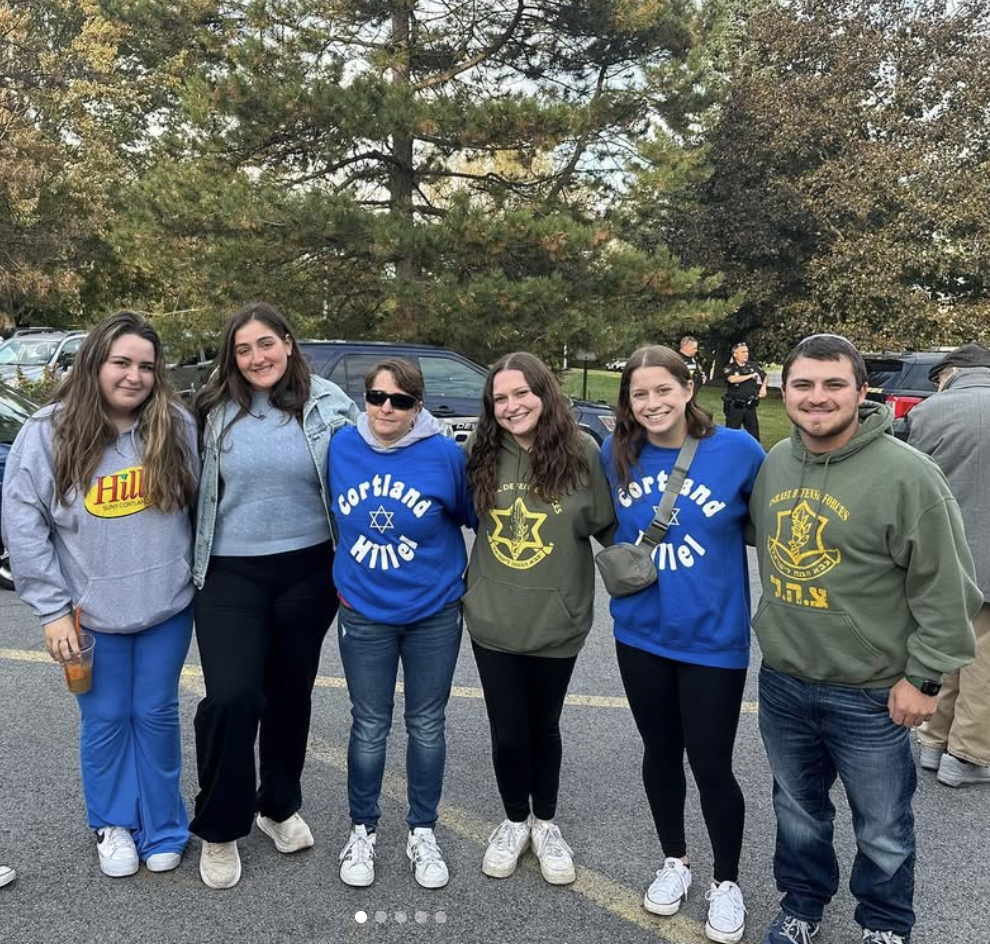
Organizations like Cortland Hillel have become a vital source of support, offering students a space to celebrate holidays, discuss identity, and find comfort in community. Bi-weekly meetings, for example, provide what many describe as a “safe haven” — a chance to relax and feel understood.” I also applaud organizations like Hillel for creating a sense of belonging for our Jewish students. From religious observances to social gatherings, I have joined in many of their events during my 23 years at Cortland. I have seen firsthand Hillel’s extraordinary cultivation of community. I believe it has to do with the leadership of faculty and staff advisors and the acceptance of fellow students,” says Bitterbaum.
Still, many say more needs to be done. Some students wish the administration would respond more proactively to antisemitism or include more Jewish voices in diversity and inclusion efforts. When something happens, it often feels like it’s brushed aside; we just want acknowledgment that what we experience is real. For now, Jewish students continue to lean on one another and on organizations like Hillel to create a sense of belonging. Despite the challenges, there’s a shared determination to speak up — and to be seen not just in moments of crisis, but as an integral part of campus life.